

I is for Ice Formations
One of the things I’ve found challenging in learning about the cryosphere is the large number of terms related to ice, such as ice sheets, ice caps, ice shelves, and icebergs, all of which begin as snow. There’s also sea ice and its various forms.

J is for Jökulhlaup
A jökulhlaup is a type of flood emanating from glaciers that’s pronounced “yo-KOOL-lahp.” The word is Icelandic in origin and means “glacial run” in its native tongue.
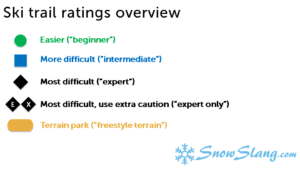
Ski trail ratings: green circles, blue squares, and black diamonds
The green circles, blue squares, and black diamonds that illustrate ski trail ratings were informed by Disney’s work on a proposed ski resort.
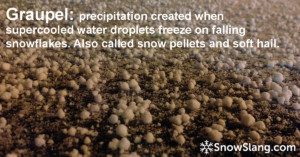
Graupel, a “supercooled” type of precipitation
Is it sleet? Hail? No, it’s graupel, a relatively obscure form of precipitation that resembles balls of Styrofoam.
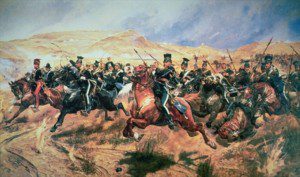
Balaclava: essential winter gear since the Crimean War
The balaclava face mask is essential gear if you ski or snowboard and the origin of the word has nothing to do with a Greek dessert.
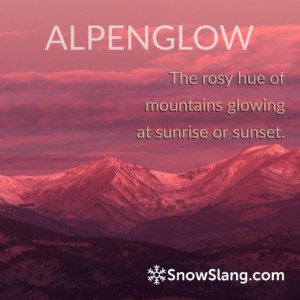
Alpenglow: fire on the mountain
Learn the origin, meaning, and cause of alpenglow, a rosy hue seen on mountains around sunrise and sunset.